


Ampoule Bottle
Zibo Chuangxinzhe : a Professional Ampoule Bottle Manufacturer
Our Factory has high production efficiency, reliable product quality, strict and perfect management system, and rich production experience.
Variety of Products
We are a glass bottle manufacturer that integrates mold opening, customized production and processing. Our products include essential oil bottles, ampoule bottle, pickle bottles, wine bottles, beverage bottles, tube bottles, food cans, cosmetic bottles, oral liquid bottles, plastic caps, aluminum caps, etc. We can offer a variety of color options including Amber/Cobalt Blue/Green/Black and Clear.
First-class Production Technology
In order to provide customers with high-quality glass bottles, we have also expanded our glass deep processing technology, such as color spraying, bottle decals, printing, etc. Our advanced production facilities and production technology ensure the highest standards in glass bottle production.
Environmentally Friendly Production
We source the finest materials to create durable, versatile and attractive glass bottles. Moreover, we produce based on the concept of environmental protection and sustainable development while complying with strict safety regulations to maintain a safe working environment.
Recognized by Many Parties
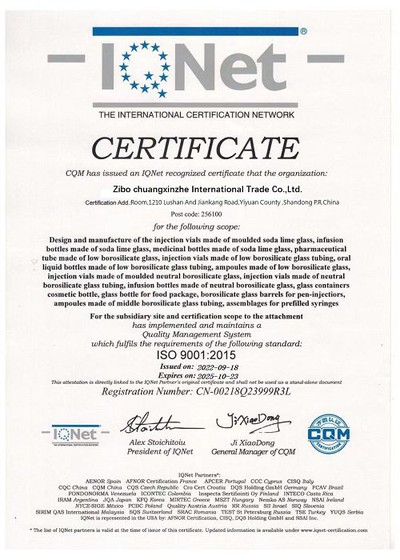
We have obtained multiple international certificates, including LFGB, SGS, ISO. We are a stable supplier to famous supermarkets and cosmetic companies around the world. At the same time, we have stable business cooperation in Southeast Asia.
-
![Amber Antibiotic Glass Bottle]() Amber Antibiotic Glass BottleRead More
Amber Antibiotic Glass BottleRead MoreAmber Antibiotic Glass Bottle is a medication container made of high-quality amber glass designed to protect sensitive drugs from light damage and maintain their potency. With a sterilized interior,
-
![Clear Moulded Glass Vial Bottle]() Clear Moulded Glass Vial BottleRead More
Clear Moulded Glass Vial BottleRead MoreClear Moulded Glass Vial Bottle - a high-quality antibiotic container made from top-grade glass. The vial bottle has a clear and smooth finish, ensuring that there are no impediments in drug
-
![Empty Ampoule Bottle]() Empty Ampoule BottleRead More
Empty Ampoule BottleRead MoreThe empty ampoule bottle is a glass container used for storing liquids, typically medical solutions. It is designed with a narrow neck and a breakable seal that must be snapped open to access the
-
![Injection Vial Opener]() Injection Vial OpenerRead More
Injection Vial OpenerRead MoreGlass ampoules for pharmaceutical packaging are small, individual glass containers used for pharmaceutical packaging. They are designed to hold a single dose of medication or vaccine, making them
-
![Clear Moulded Injection Glass Ampoule Bottles]() Clear Moulded Injection Glass Ampoule BottlesRead More
Clear Moulded Injection Glass Ampoule BottlesRead MoreClear moulded injection glass ampoule bottles are a type of glass container that is molded through process. These bottles are used for packaging liquids and solutions used in medical and
-
![Glass Vial Opener]() Glass Vial OpenerRead More
Glass Vial OpenerRead MoreGlass ampoules for skincare products are small, sealed vials that are used to preserve and deliver high-concentration serums and essences to the skin. These single-use ampoules are made of neutral
-
![Injectable Glass Vials]() Injectable Glass VialsRead More
Injectable Glass VialsRead MoreInjectable Glass Vials are specialized containers used for storing and delivery of drugs, vaccines and other solutions. These vials are made from high-quality borosilicate glass, It can meet the


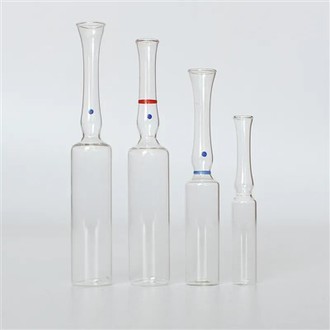


Brief Introduction to Ampoule Bottles
Ampoule bottle is a small sealed vial which is used to contain and preserve a sample, usually a solid or liquid. Ampoules are usually made of glass. Modern ampoules are most commonly used to contain pharmaceuticals and chemicals that must be protected from air and contaminants. They are hermetically sealed by melting the thin top with an open flame, and usually opened by snapping off the neck. The space above the chemical may be filled with an inert gas before sealing. The walls of glass ampoules are usually sufficiently strong to be brought into a glovebox without any difficulty. Glass ampoules are more expensive than bottles and other simple containers, but there are many situations where their superior imperviousness to gases and liquids and all-glass interior surface are worth the extra cost.
Ampoule Bottles Features
Safe Storage
Crafted from supreme quality glass, these ampoules guarantee maximum safety and hinder chemical interaction with the stored substances.
Flexible Design
With multiple shapes, sizes, and colors to choose from, ampoules are flexible enough to cater to your unique needs.
Quality Assurance
Adhering to stringent quality protocols during their manufacturing, these ampoules promise the trustworthy storage of pharmaceutical or cosmetic products.
Wide Application
Whether you need to store pharmaceutical drugs or cosmetic products, these Glass Ampoules serve as a versatile storage solution.
Ampoule Bottles Specifications
|
Product Name |
Glass Ampoule |
|
Color |
Clear and Amber |
|
Capacity |
1ml 2ml 3ml 5ml 10ml |
|
Material |
Borosilicate glass |
|
Open way |
OPC or break ring |
|
Water resistance |
Type I |
|
Surface treatment |
Screen Printing |
|
MOQ |
100000 PCS |
Ampoule Bottles: Different Types of Glass Raw Materials
Glass ampoules are easily sterilizable, are ideal for protecting contents from UV rays, do not react with chemicals inside, and are often transparent so the contents can be easily seen. Although all types of glass can provide the above advantages, it is important to note that there are many types of glass used to make ampoules, and they all have different characteristics, prices, uses, manufacturing, and availability. To learn more about the types of these glass materials, the features they offer, how they are used, and more, read on.
Type I Glass
Type I glass consists of various elements, all of which are great at resisting chemicals of strong acids and alkalis. It is made up of 80%silica, 10% of boric oxide, and small quantities of both sodium oxide and aluminium oxide. All type I glass containers are suitable for both parenteral and non-parenteral preparations.
Type II Glass
Type II glass containers are very similar to type III glass, so much so that they are considered as modified type III glass containers. Like type I containers, and type III, type II has a high hydrolytic resistance, which makes them highly resistant to hot water. This makes them suitable to resist reactions and therefore, helps the contents to remain in their original state. The difference between type II and type III glass containers is that the inside of type II containers is treated with sulfur. The difference between type II and type I glass containers is that type II glass has a lower melting point. They are great at protecting the contents from weathering. However, type II glass is much easier to mould yet less likely to withstand hot environments. The easy-to-mould glass makes it suitable for storing neutral aqueous and acidic chemicals.
Type III Glass
Type III glass is made up of 75% silica, 15% sodium oxide, and 10% calcium oxide. The remaining 5% of the glass consists of small amounts of magnesium, potassium, and aluminium oxides. The use of these small quantities helps the glass become more versatile. The aluminium oxide benefits the glass as it improves its chemical durability. Meanwhile, the magnesium oxide helps the glass become easier to mould at lower temperatures. Type III glasses can be used in parenteral and non-parenteral practices, as well as being suitable for storing aqueous solutions. This type of glass is much more versatile.
Custom Ampoule Bottles: The Benefits You Will Reap
Ampoules were developed at around the same time as injections were invented as a form of medical treatment. With this type of primary packaging, pharmaceutical drugs only contact the inert and gas/vapour-impermeable material - glass - which is also tamper-proof. Choose to customize these bottles from the manufacturer and you will reap many benefits.
Varying Designs
Most ampoules are manufactured in accordance with the DIN ISO EN 9187-1/2 standard in straight-stem, funnel-type and sealed designs. Straight-stem and funnel-type ampoules are supplied open, so the customer must wash and sterilise them before filling. Sealed ampoules, as the name indicates, are supplied sealed. They are sterile on the inside as a result of the high temperatures in the manufacturing process, which means the customer can open them with a sharp flame, fill them and then re-seal them. Customised packaging solutions are available for pharmaceutical drugs with challenging requirements. Dimensions and glass quality can be tailored to the specific requirements of the drug itself and to the filling process.
Total Quality Control
Medical technology products must meet exacting quality requirements. One of the most important pre-requisites for high product quality is automation in the production and inspection processes. Laboratory tests involving the destruction of the products are regularly performed on random samples taken from the production lines. They serve to check ampoule break force in the opening process, for instance. The hydrolytic resistance of the ampoule’s inside surface is also tested in the lab. Every ampoule that is manufactured is inspected in detail by automated camera systems before the packaging process takes place. Advanced image processing technology not only ensures uncompromising quality, it also improves production process efficiency by substantially reducing the number of false rejects. The length of the score on OPC ampoules is also checked to calculate its depth and whether the break force conforms to specification. If the ampoules are printed, the texts are checked for legibility, absence of errors and compliance with customer specifications. Special inline optical character recognition systems are used for this purpose. Automatic cosmetic defect recognition equipment can be found on every single production line. Early identification of cosmetic defects in the ampoule production process makes the customer filling process more stable with fewer rejects.
Product by Process
Proof of process capability and supply reliability are becoming increasingly important supplier selection criteria for pharmaceutical customers in addition to product quality. A defined product quality can only be delivered reliably and sustainably if both the product itself and the effects of material characteristics and process parameters on the product’s quality are understood. In this context, product quality monitoring not only involves rejecting defective products, it also performs the second and equally important function of providing statistical data for process control that can be used for the real-time optimisation of the production process. The objective is a process that is so stable that hardly any adjustments are necessary. In this kind of process, the products don’t just look identical on the outside, they are consistently identical in every respect.
Supporting the Pharmaceutical Industry
The ampoule manufacturer must supply the pharmaceutical industry with products that optimally satisfy their primary packaging requirements for a specific pharmaceutical drug or a specific application. Some manufacturers do this by working with the customer to select or modify products, sometimes even developing brand new ones, in order to meet all specifications. Customers are recommended to fully take advantage of ampoule manufacturers’ expertise to optimise production processes. In this way, even when customised solutions are demanded the number of rejects can be kept to a minimum.
The fill-and-finish process has continually evolved in the pharmaceutical industry, transitioning from manual operations to semi-automated and fully automated systems. A crucial component of this process is the selection of appropriate primary packaging containers, such as ampoules, vials, or syringes, each of which plays a key role in maintaining drug stability and ensuring accurate dosing.
The Standardization of Ampoules
Historically, the design and manufacture of ampoules have been responsive to innovations in fill-and-finish practices. The International Standard ISO 9187-1, last updated in 2010, set the standard for three primary forms of ampoules: Forms B, C, and D. This standardization ensured compatibility with evolving drug delivery systems and facilitated the uniform assessment of container closure integrity (CCI), extractables, and leachables.
Unpacking the Three Types of Ampoules
*Form B Ampoules: Versatility and Precision
Form B ampoules, the latest in the evolution of ampoule design, were engineered with improved steam and funnel dimensions to complement modern fill-and-finish machines. They are particularly suited to fill-and-finish devices that require a precise filling needle insertion. However, form B ampoules can be used in all type of fill-and-finish machines that include a washing, drying and depyrogenation module - including old fill-and-finish machines, through a slight reduction on the line speed to achieve precision during filling. Form B ampoules dominate the market in regions such as China, EMEA, and APAC. Form B ampoules are strongly recommended as the standard glass container. These ampoules offer versatility in fill-and-finish production sites as they can be employed in various machine types. Additionally, their shorter height and narrower opening make sealing the ampoule more convenient. Many pharmaceutical companies have recognized these advantages, making Form B ampoules the most widely utilized in three of the largest markets.
*Form C Ampoules: Legacy and Functionality
Form C ampoules, one of the oldest types, feature a wider opening designed for compatibility with less precise filling needles. They are the preferred choice in North and Central America and parts of Asia and South America. Despite their larger dimensions than Form B, these ampoules offer a practical solution for older fill-and-finish machines. A wider opening is beneficial to avoid droplets of solution into the inner walls of the steam. Form C ampoules distinguish themselves for having a wider opening (roughly +10%) and greater total height (roughly +10%) than form B.
*Form D Ampoules: Simplicity Since the Beginning
Form D ampoules, also known as closed ampoules, were designed for machines without the washing, drying, and depyrogenation module. At the time they were created, particles were not an issue, and more important was to ease the production for fill-and-finish. With the help of a burner, the CDMO or Pharmaceutical company achieves the opening of the ampoule before filling and the final closing. These ampoules continue being popular in markets such as South America and North and Central America. The opening and total height dimensions of D ampoules are bigger than in form B and C. Due to the absence of washing before filling, Form D ampoules pose an elevated risk of potential contamination coming into contact with the drug solution, that can cause a potential threat to patient health. Consequently, it is advisable to recommend Form D ampoules in situations where there is the option of implementing a complete line equipped with a washing and depyrogenation module. This setup enables the use of Form D ampoules, mitigating the risk associated with potential contamination.
Key Considerations When Navigating Ampoule Selection
Selecting the best ampoules for your fill-and-finish line involves an in-depth understanding of the different ampoule forms and their compatibility with your manufacturing process. However, choosing the right ampoule involves considerations beyond the fill-and-finish line requirements. Factors such as light sensitivity, and the risk of extractables and leachables should all be considered.
Difference Between a Vial and an Ampoule
Vials and ampoules may do the same things, but they’re not the same. This isn’t news for medical practitioners, but you don’t have to be one to understand the difference. Here’s how you can tell:




Ampoules are Smaller and Can Only be Used Once
One of the easiest ways to tell an ampoule apart is the number of times it can be used. Ampoules can only be used once. The nature of an ampoule doesn’t permit anything more than a single use. They’re seamless little containers without a cork and must be broken or snapped at the neck to access their content. It’s like breaking a bottle (only you’d have to be more careful here because the content is extremely useful). Once you break the ampoule, it cannot be closed or resealed. This manner of sealing implies that the content within the ampoule must be protected from external elements such as oxygen. The non-reusable nature of the ampoule makes it ideal for single-dose drugs or samples. Ampoules are also much smaller than vials and are typically made of glass. However, they can also be made of plastic.
Vials are Larger and Can be Used More Than Once
Vials are a larger version of ampoules. In addition, vials have a sealed top, which can either be a screw cap or a non-latex stopper. Like ampoules, vials can also be glass or plastic, and their flat bottom makes them compatible with shelf or top-of-the-counter placement. Aside from being larger and having a cover, one other thing that sets a vial apart from an ampoule is its reusability. They can carry multiple doses of drugs and can be reused a number of times. You can use vials to fill syringes too. Sometimes, you don’t need to uncover the cap entirely. Instead, you can push a needle through a non-latex stopper to take out the content within the vial.
Ampoules vs Vials for Unstable Chemical Elements
Though ampoules are smaller in size and only usable once, they’re a perfect choice if you want to store or transport unstable chemical elements. Unstable chemical elements are elements that get disturbed upon exposure to oxygen or any other external chemical compounds in the air. The seamlessness of an ampoule makes it the best option to keep chemical elements like these.
Vials are the Perfect Choice for Stable Chemical Elements
Vials are better suited for stable chemical elements, and ampoules are for unstable ones. Due to its stoppered nature, chemicals kept in vials do not react when exposed to oxygen, so they’re stable.
Vials vs Ampoules Storage
Ampoules are used for short-term storage. Never keep drugs for the long term. For long-term storage, vials are best.
Our Certificate
Below are our certificate:


Our Factory
Below is our factory:


FAQ
Q: What are ampoules used for?
Q: What are the risks of glass ampoules?
Q: How do you protect yourself when opening an ampoule?
Q: Why are glass ampoules still used?
Q: How are glass ampoules sealed?
Q: What type of glass is used in ampoules?
Q: What are glass vials used for?
Q: How long have glass bottles been around?
Q: How do you break a glass vial safely?
Q: Can glass vials be frozen?
Q: Can you heat glass vials?
Q: Can glass vials be stored at?
Q: Why do you push air into a vial?
Q: How do you store glass bottles?
Q: How do you pack glass vials?
Q: Are glass bottles healthy?
We're well-known as one of the leading ampoule bottle enterprises in China, specialized in providing high quality customized service. Please rest assured to wholesale ampoule bottle at competitive price from our factory. Contact us for free sample.
Ampoule Bottle, Clear Moulded Injection Glass Ampoule Bottles, Empty Ampoule Bottle