


Food Jar
Zibo Chuangxinzhe : a Professional Food Jars Manufacturer
Our Factory has high production efficiency, reliable product quality, strict and perfect management system, and rich production experience.
Variety of Products
We are a glass bottle manufacturer that integrates mold opening, customized production and processing. Our products include essential oil bottles, ampoule bottle, pickle bottles, wine bottles, beverage bottles, tube bottles, food cans, cosmetic bottles, oral liquid bottles, plastic caps, aluminum caps, etc. We can offer a variety of color options including Amber/Cobalt Blue/Green/Black and Clear.
First-class Production Technology
In order to provide customers with high-quality glass bottles, we have also expanded our glass deep processing technology, such as color spraying, bottle decals, printing, etc. Our advanced production facilities and production technology ensure the highest standards in glass bottle production.
Environmentally Friendly Production
We source the finest materials to create durable, versatile and attractive glass bottles. Moreover, we produce based on the concept of environmental protection and sustainable development while complying with strict safety regulations to maintain a safe working environment.
Recognized by Many Parties
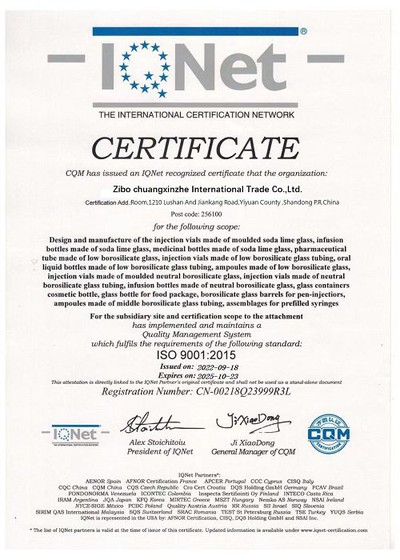
We have obtained multiple international certificates, including LFGB, SGS, ISO. We are a stable supplier to famous supermarkets and cosmetic companies around the world. At the same time, we have stable business cooperation in Southeast Asia.
-
![Square Glass Jars With Lids]() Square Glass Jars With LidsRead More
Square Glass Jars With LidsRead MoreThis type Square Glass Jars with Lids feature a sleek square shape that maximizes shelf space while offering a modern, minimalist look. The wide-mouth design ensures easy filling and cleaning, making
-
![Glass Food Storage Jar]() Glass Food Storage JarRead More
Glass Food Storage JarRead MoreOur Glass Food Storage Jar, Made from high-quality glass, this jar is durable and perfect for storing a variety of items such as cereal, pasta, candy, and more. The airtight seal ensures that your
-
![Glass Olive Oil Bottle]() Glass Olive Oil BottleRead More
Glass Olive Oil BottleRead MoreThis Glass Olive Oil Bottle is the perfect addition to any kitchen. Made from high-quality glass, it is sturdy and durable. The bottle can hold a generous amount of oil, so you won't have to refill
-
![Food Jar Containers with Lids]() Food Jar Containers with LidsRead More
Food Jar Containers with LidsRead MoreFood Jar Containers with Lids provide a stylish and practical storage solution for your food and beverages. These glass square bottles and hexagonal jars are perfect for storing all sorts of food -
-
![Glass Jar Food]() Glass Jar FoodRead More
Glass Jar FoodRead MoreGlass Jar Food is a glass bottle used to store vegetable oil, soy sauce, vinegar and other kitchen supplies, its specifications range from 100ml to 1000ml, the shape of square and round, or
-
![Food Container Jars]() Food Container JarsRead More
Food Container JarsRead MoreThe Food Container Jars are the perfect solution for storing your food items in a stylish, practical and eco-friendly way. Made with high-quality glass, these jars are sturdy, durable and easy to
-
![Food Jar White Aluminium Lid]() Food Jar White Aluminium LidRead More
Food Jar White Aluminium LidRead MoreThe Food Jar with White Aluminium Lid is a stylish and practical glass storage container. It is perfect for storing a variety of foods and snacks, from salads to nuts and dried fruits. The sleek
-
![Glass Storage Containers]() Glass Storage ContainersRead More
Glass Storage ContainersRead MoreGlass storage containers are made of durable, non-toxic glass that is resistant to stains and odors. These containers come in a variety of shapes and sizes, making them versatile and easy to use for
-
![Food Jar Comb Honey Packaging for Honey]() Food Jar Comb Honey Packaging for HoneyRead More
Food Jar Comb Honey Packaging for HoneyRead MoreThe Food Jar Comb Honey Packaging for Honey is a popular and classic way of packaging honey. It is made of high-quality glass to keep honey fresh for a long time, come in various shapes and sizes.
-
![Glass Olive Oil Sprayer Bottle]() Glass Olive Oil Sprayer BottleRead More
Glass Olive Oil Sprayer BottleRead MoreThe Glass Olive Oil Sprayer Bottle is a kitchen glass bottle that allows users to easily apply a fine mist of olive oil onto food items. The bottle is made of high-quality glass and features a
-
![Spice Jar Glass Seasoning Bottle]() Spice Jar Glass Seasoning BottleRead More
Spice Jar Glass Seasoning BottleRead MoreThe Spice Jar Glass Seasoning Bottle may storing your favorite spices and seasonings. Made from high-quality glass, this bottle With its airtight lid, the Spice Jar Glass Seasoning Bottle keeps your
-
![Seasoning Bottle with Spoon]() Seasoning Bottle with SpoonRead More
Seasoning Bottle with SpoonRead MoreSeasoning Bottle with Spoon is a convenient and practical kitchen accessory. This bottle is stockpile small amounts of seasoning glass bottle, such as salt, pepper, or herbs. The attached spoon

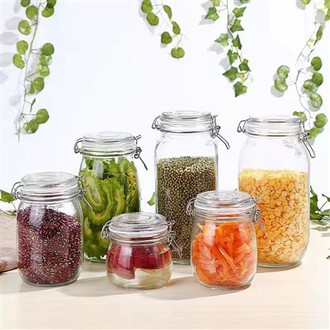


Brief Introduction to Food Jars
Food jar and bottles can store all kinds of food for example: preserves, sauces, powders, spices, and other ingredients.They come in various shapes, sizes, depending on the type of food that needs to be stored.The food jar and bottles also come with different types of lids and closures, such as twist-off lids, snap-on lids, and screw caps.The color of the lid can be customized according to your needs.
How are Glass Food Jars Made?
Ingredients Used in Glass Making
We primarily use silica, soda ash(sodium carbonate), and limestone(calcium carbonate) in making glass jars. Silica forms 70 - 74% of the mixture, creating the jar’s basic structure. Soda ash, about 12-16%, lowers the melting temperature, saving energy. Limestone, at 5-10%, enhances durability. Optional additives like aluminum oxide (for strength) and metal oxides (for different colors) are used in small quantities, typically less than 5%. These components, when heated to about 1700°C, fuse into a homogenous liquid, later cooled to form the glass jar. This precise blend ensures a balance of transparency, strength, and heat resistance.
The Glass Melting Process
In making glass, we heat stuff like sand, soda ash, and limestone to a whopping 1700°C. Imagine this: it’s like turning solid ice into water. Here, the sand turns all bendy and stretchy. Soda ash is pretty cool – it’s like throwing salt on icy sidewalks, making it easier for the sand to melt. And then there’s limestone, our rock-solid buddy, keeping everything steady. So, all these gritty bits mix up and smooth out into this awesome, even pool of glass, ready to be turned into tough, see-through stuff we use every day.
Shaping and Cooling the Glass
In the fascinating world of glass bottle and jar production, shaping and cooling are crucial stages. Imagine glass like honey, heated until it flows. In shaping, we might use blow process molding, where air inflates the glass into a mold, much like blowing a bubble. For precision, there’s injection molding, injecting glass like a syringe into a form. Both methods ensure exact shapes.Now, consider annealing process, the cooling phase. It’s akin to a resting athlete, slowly bringing their heart rate down. Here, the glass cools gradually, reducing stress. This step is vital for strength, making the glass resilient to sudden temperature changes. For instance, a jar might withstand a hot soup pour, a rapid shift from 20°C to 95°C, without cracking. This careful manufacturing process ensures our jars are not only beautifully shaped but also remarkably tough and reliable.
Food Jars Specifications
|
Capacity |
1oz, 2oz, 3oz, 4oz, 8oz, 10oz, 12oz, 14oz, 18oz,150ml, 200ml, 400ml, 500ml, 550ml, 700ml, 900ml, 1250ml, 1350ml, 1500ml, 1800ml,3200ml, 4800ml and More Size. |
|
Diameter |
50mm, 55mm, 65mm, 85mm, 100mm, 120mm, 150mm and More size. |
|
Surface Handling |
Silk screen printing, Hot stamping, Decal, Coated, Frosting, Electroplating, Label, etc. |
|
Lids |
Bamboo lid, plastic lid, stainless steel lid, rubber lid, glass lid, iron lid, zinc alloy lid,cork lid, ply lid, yellow pine lid. |
|
Color |
Customized(Customer's Requirements) |
|
Usage |
Food, Pasta, Coffee Beans, Cookies, Spice, Tea, Nuts, Grain, Sugar, Candy, etc. |
|
MOQ |
5000pcs |
|
Package |
Carton, Pallet, Color box, Customer's Requirements. |
|
OEM/ODM |
Acceptable |
Different Types of Glass Used in Jars
Borosilicate Glass (Also Known As Pyrex)
Borosilicate glass – the hero in the world of high temperatures and chemical experiments. It’s not just glass; it’s a guardian, protecting sensitive products from the harshness of the outside world. It is commonly used for chemical lab equipment.
Treated Soda-Lime Glass
Treated soda-lime glass is like a phoenix, reborn stronger and more resilient. Through treatments and coatings, this common type of glass transcends its limitations, becoming a robust choice for various applications.
Soda-Lime Glass or Soda-Lime-Silica Glass
The most common yet unappreciated, soda lime glass, is the everyday warrior. From the simplest of food or pharmaceuticals storage jars to the most intricate decorative figurines and pieces, its presence is ubiquitous yet always vital.
Glass Food Jars Benefits



Sturdy Storage
Glass jars are more durable than you may expect. Unlike flimsy plastic containers that are susceptible to cracks, glass jars can withstand minor drops and impacts without breaking. While they shouldn't be carelessly handled, glass jars provide reliable protection for stored goods. The sturdy build securely contains dry goods, liquids, and ingredients without leakage concerns over extended periods. Glass bottles and jars can even survive temperature shocks, moving from freezer to boiling liquids with no cracking. They can also contain all foods inside without reaction - acids and oils do not stain or deteriorate the glass surface.
Transparent for Visibility
Unlike opaque metal cans or colored plastic containers, glass jars allow you to see the contents inside. Their transparency allows for easy identification of stored ingredients at a glance. This visibility ensures you always know exactly what's inside each container, even when stored long-term.
Easy Labeling
Glass jars are easy to label. Whether you want to create your own labels, or use preprinted labels, you can create a pantry storage system that makes everything easy to find. Peel off each label and affix it to the appropriate jar.
Sterile and Clean
Glass storage jars are easy to clean. Food and liquids don't stick to the smooth glass surfaces in the same way they do on materials like plastic or metal. You can scrub glass jars clean or let them soak to loosen stuck-on residue. You can get them fully sterilized easily, too. Boil the glass jars in hot water to sanitize them completely and kill mold, bacteria, and germs. This prevents contamination of the products you choose to store inside. Glass makes keeping your storage jars fresh and hygienic simple. Other materials such as stained plastics or rusted metals can harbor mold and bacteria over time, but glass food storage containers remain pristine with a good hot wash.
Flavor Integrity
Glass jars do not interfere with the flavor integrity of ingredients. Metal and even some plastic containers can leech metallic or chemical tastes into foods, but glass does not react this way with stored ingredients. Your soups, broths, oils, and other flavorful liquids stay unchanged after months or even years inside glass bottles. Spices such as cinnamon sticks or pungent curry blends also maintain their complex flavors when they’re properly sealed within glass spice jars. You won’t have to worry about plastic or cardboard tastes seeping into your fermented foods.
Easy Storage
You can stack glass jars neatly to facilitate efficient and organized storage. Their straight, rigid edges allow for the efficient use of shelf space by aligning flush without awkward bulges. The jars come in standardized sizes, stacking into tidy columns that streamline organization systems. Thanks to their consistency, you will be able to locate items quickly. The durable build we mentioned previously lets you safely stack multiple layers, fully utilizing overhead space. Glass jars optimize storage space, whether on kitchen shelves, in pantry cupboards, or the fridge. Choose to store them in upright or sideways orientations, depending on the needs of your space. Glass jars make storage easy. You'll never have to deal with a cluttered pantry or expired mystery items again.
Sustainable
Our glass storage jars are an eco-friendly way to keep your spaces organized. Made purely from abundant natural silica sand, our jars use borosilicate glass for superior durability and thermal resistance, compared to other jars that use soda-lime compositions. Borosilicate glass production uses less carbon than plastic manufacturing. The lightweight, non-porous material allows jars to be used and reused for years, rather than discarding them in landfills. Additionally, when they end up being recycled, the inert glass can be reused to create new glass or safely reintegrated with the earth. From raw sand sourcing to consumer reuse and recycling, glass containers promote a circular economy - the perfect production system for sustainability. Our glass jars align kitchen organization efforts with environmentally responsible living.
Versatility
The versatile nature of glass jars allows a wide range of uses beyond pantry storage. Their durability and reusable properties make them ideal for meal prep transport containers. Replace wasteful disposable packaging by prepping picnic foods in glass jars instead. Glass jars provide reusable packaging options for sandwiches, salads, baked goods, and snacks. Craft flavor-infused recipes and store them safely in glass containers. Coordinate elegant glass food storage jars with matching lids to elevate any occasion. You can repurpose empties into DIY projects too! The versatile applications extend as far as your creativity takes you, from meal prep and storage to displays and gifts!
Visual Appeal
Glass jars can make any space look nicer. Put colorful flowers in jars on the kitchen table or make a tower of jars with candles inside that glow through pierced metal lids. Use recycled jars and lids for cool wedding or party decorations. Clear glass jars allow you to be creative with different shapes and sizes. Square jars can stack candy vertically and rounded apothecary jars have a unique aesthetic appeal. Jars do more than just store ingredients. Potatoes in glass become decor that makes dining rooms smell fresh and earthy. Oils glow in jars under cabinet lights at night. Use your glass storage containers as decorative items and elevate your living room or kitchen space.
Wholesale Glass Food Jars: Things to Consider When Choosing the Right Supplier
Quality
It is important to ensure that the glass bottle supplier you select has a good reputation for providing quality products. Ask for samples of the bottles and take the time to inspect them for any imperfections or flaws. You should also enquire about the production process and whether the bottles are tested for safety and compliance.
01
Range
The range of glass bottles available from the supplier should meet your needs. Consider the types of bottles you require, such as clear, amber, green, or frosted glass, and the sizes you need. Make sure the supplier has the right range to suit your product and can provide the right quantity.
02
Price
The price of the bottles is an important factor to consider when selecting a supplier. Make sure you get quotes from several suppliers to compare the prices and ensure you are getting the best deal.
03
Delivery Time
It is important to ensure that the supplier can provide your bottles in the required timeframe. If there are any delays then this could affect your production process and cause delays in getting your product to market.
04
Customer Service
Good customer service is essential when it comes to finding a supplier. Make sure you ask questions and get an understanding of how the supplier operates and how they handle customer queries.
05
Tips for Properly Using Glass Storage Jars
Using glass storage jars effectively requires a few key practices to ensure the optimal organization and preservation of your stored items in long term.
Cleaning and Maintenance
Regularly wash both the glass jar and its lid with some warm, soapy water before refilling. Give them a good rinse to wash away all the suds, and then let them chill out and air dry completely. Why? Because this simple routine is your ticket to keeping odors, stains, and yucky stuff at bay. Your new contents deserve the best - and that means a clean, fresh start every time. Clean, dry, and ready to welcome whatever you fill them with next - that’s the magic of glass storage jars that stay as fresh as your ideas.
Airtight Sealing Techniques
For optimal freshness, ensure an airtight seal by closing the lid tightly. Yup, that’s right, close that lid snugly. Listen for that satisfying “pop” sound. It’s like telling you that your jar is giving your stuff the ultimate airtight hug. Why is this step so important? Because it’s the secret to preserving the freshness. Whether it’s your favorite snacks or delightful ingredients, that airtight seal keeps everything top-notch. So, remember, a little “pop” is your sign that your glass storage jar is doing its job right. It’s the sound of quality, the taste of perfection, and the key to making your stored items good.
Avoiding Extreme Temperatures
Glass is pretty temperature-resistant, but it’s not a fan of extreme temperature makeovers. So, play it safe and avoid sudden shifts. For instance, don’t pour hot stuff into a chilly jar or send a cold jar to a hot party. Why? Because these temperature surprises can cause cracks or even breakage - and that’s no fun. Oh, and here’s another tip: don’t go overboard with filling. Overfilling might mess with the seal and lead to unwelcome spills. Treat your glass storage jar like the treasure it is. Keep it cozy, avoid extreme temperature, and give it the respect it deserves. That way, you and your jar will have a long and happy journey together.
Storing in a Dry Place
Find your glass storage jars a comfy spot in your home, away from the sun’s direct gaze. Sunlight can be a bit of a troublemaker. Why? Prolonged exposure to sunlight can mess with your contents and the glass itself over time. Let your glass storage jars chill out in a cozy corner, away from the spotlight. It’s a simple way to make sure they stay as awesome as the day you got them.
Labeling Contents and Dates
When your glass storage jars, all dressed up with labels, are like giving each of them own little ID card. Write down what’s inside and the date it was filled. This way will help you spot what you need in a heartbeat, so no more guessing. Plus, you’ll know which items need to refilled or used before they hit their expiration date. So, grab that label maker or a pen and get creative. Your glass storage jars will save you time and keep food waste. That’s the power for a more organized and sustainable life.
Handle with Care
When you’re placing them down or moving them around, give them a gentle touch. No rough moves allowed, especially on hard surfaces. Glass is strong, but it’s not invincible. So, handle with care to avoid any unexpected breakage. It’s a small action that goes a long way, preserving the beauty and functionality of your glass storage jars for years to come.
A Step-by-Step to Clean a Glass Food Storage Jar
This step-by-step guide will provide you with easy-to-follow instructions to ensure your glass jars food storage are impeccably clean and ready for storing your favorite ingredients.
Before you begin, gather the tools you'll need: a non-abrasive sponge or brush, mild dish soap, vinegar, warm water, and a clean towel. We should select non-toxic cleaning solutions to ensure food safety. Next, empty the contents of the glass jars, discard any rotten or expired items, and remove any trash or leftovers. Other parts such as lids and seals are then removed and cleaned separately.
Depending on how dirty your glass storage jars are, there are two common cleaning techniques.
*Mild Dish Soap and Warm Water Solution
Rinse the glass storage jars well with warm running water. Gently scrub the inside and outside of the jar with a non-abrasive sponge or brush. Take the time to scrub all surfaces to remove any remaining residue or dirt. Pay special attention to difficult areas such as stubborn dirt and residue, narrow necks, and grooves. These areas tend to accumulate debris and require thorough cleaning. Check again every corner and cranny to see if any food residue or debris has been removed.
*Vinegar and Water Solution
Make a soaking solution by mixing equal parts vinegar and water in a clean sink or basin. Dip the glass jar into the solution and let it soak for about 15-30 minutes. Vinegar will help eliminate odors and disinfect glass. Rinse the glass again with warm water to remove any vinegar or soap residue. Make sure the glass is completely clean. Then you can proceed to the next step.
Wash the lid and gasket separately in warm, soapy water. Pay particular attention to grooves and crevices. Rinse thoroughly and dry completely before assembling.
After rinsing, it is important to dry the glass properly to prevent moisture buildup and bacterial growth. There are two options for drying the glass.
*Natural Drying
Place the jar upside down on a clean, dry cupboard or towel. Improve air circulation around the jar to speed up drying. Please leave it as it is until it dries completely.
*Towel Drying
Gently wipe the glass with a clean, lint-free towel. First, pat the inside of the glass dry, paying attention to hard-to-reach areas. The outer surface is then carefully dried without leaving any water stains or streaks.
Once everything is clean and dry, reassemble the glass jar by placing the lid and seals back in place. Ensure a tight seal to maintain freshness. Store the glass jar in a clean and dry location away from direct sunlight and excessive heat.
Our Certificate
Below are our certificate:


Our Factory
Below is our factory:


FAQ
Q: Why does food last longer in glass jars?
Q: Where should glass jars be stored?
Q: Are glass jars better than plastic?
Q: Is it better to store food in mason jars?
Q: Is it better to store food in glass or stainless steel containers?
Q: Can you put hot food in a glass container?
Q: Do glass storage containers prevent mold?
Q: What does shatterproof glass mean if the glass still breaks on impact?
Q: Is it safe to reuse glass food jars?
Q: Why does hot water cause glass jars to break?
Q: Do I need to leave headspace when storing food in a glass jar?
Q: Why does food last longer in glass jars?
Q: How can you tell if a glass jar is food safe?
Q: Are glass jars good for storing food?
Q: How long can you store food in jars?
Q: Can I reuse glass jars?
We're well-known as one of the leading food jar enterprises in China, specialized in providing high quality customized service. Please rest assured to wholesale food jar at competitive price from our factory. Contact us for free sample.
Food Jar Mini, Bird s Nest Bottle, Spice Jar Glass Seasoning Bottle