


Beverage Bottle
Zibao Chuangxinzhe : a Professional Beverage Bottle Manufacturer
Our Factory has high production efficiency, reliable product quality, strict and perfect management system, and rich production experience.
Variety of Products
We are a glass bottle manufacturer that integrates mold opening, customized production and processing. Our products include essential oil bottles, ampoule bottle, pickle bottles, wine bottles, beverage bottles, tube bottles, food cans, cosmetic bottles, oral liquid bottles, plastic caps, aluminum caps, etc. We can offer a variety of color options including Amber/Cobalt Blue/Green/Black and Clear.
First-class Production Technology
In order to provide customers with high-quality glass bottles, we have also expanded our glass deep processing technology, such as color spraying, bottle decals, printing, etc. Our advanced production facilities and production technology ensure the highest standards in glass bottle production.
Environmentally Friendly Production
We source the finest materials to create durable, versatile and attractive glass bottles. Moreover, we produce based on the concept of environmental protection and sustainable development while complying with strict safety regulations to maintain a safe working environment.
Recognized by Many Parties
We have obtained multiple international certificates, including LFGB, SGS, ISO. We are a stable supplier to famous supermarkets and cosmetic companies around the world. At the same time, we have stable business cooperation in Southeast Asia.
-
![Milk Jug Water Bottle]() Milk Jug Water BottleRead More
Milk Jug Water BottleRead MoreThe Milk Jug Water Bottle is the perfect way to store and transport your milk. Made from high-quality glass, this bottle is both stylish and functional. With a capacity of 15 ounces, it can hold
-
![Glass Bottles with Screw Cap]() Glass Bottles with Screw CapRead More
Glass Bottles with Screw CapRead MoreGlass bottles with screw cap are popular and practical containers for various products, such as beverages, essential oils, and perfumes. The screw cap provides a secure closure and easy access to the
-
![16 Oz Juice Bottles]() 16 Oz Juice BottlesRead More
16 Oz Juice BottlesRead More16oz Juice Bottles are premium glass beverage bottles designed for maximum style and functionality. Made with high-quality, lead-free glass, these bottles are perfect for storing all kinds of juices,
-
![Juice Bottles for Round]() Juice Bottles for RoundRead More
Juice Bottles for RoundRead MoreRound Juice Bottles are perfect for storing and serving your cold pressed juices, smoothies, and other beverages. these bottles made from high-quality glass, are sturdy. The round shape enhances the
-
![Flat Juice Containers]() Flat Juice ContainersRead More
Flat Juice ContainersRead Moreflat juice container is a convenient and eco-friendly way to store and transport your favorite beverage. Made from durable glass, the container features a resealable cap storage. Its flat design
-
![Glass Juice Bottles with Lids]() Glass Juice Bottles with LidsRead More
Glass Juice Bottles with LidsRead MoreGlass juice bottles with lids are a popular choice for storing and transporting fresh juice. Made from high-quality glass, these bottles are both durable and eco-friendly, as they can be reused and
-
![8 Oz Juice Bottles]() 8 Oz Juice BottlesRead More
8 Oz Juice BottlesRead More8oz juice bottles are a popular choice for packaging fresh juices and smoothies. These 8-ounce containers are compact and easy to carry, making them ideal for on-the-go consumption. Made from durable
-
![Coffee Glass Bottle]() Coffee Glass BottleRead More
Coffee Glass BottleRead MoreThe coffee glass bottle is a stylish and sustainable beverage container that combines the convenience of a travel mug with the eco-friendliness of a glass bottle. Its keeps drinks hot or cold for
-
![Flavor Water Bottles]() Flavor Water BottlesRead More
Flavor Water BottlesRead MoreIntroducing the Flavor Water Bottles - the perfect way to stay hydrated and refreshed wherever you go! These sleek and stylish glass drink bottles feature a tapered design that fits comfortably in
-
![Cool Drink Bottles]() Cool Drink BottlesRead More
Cool Drink BottlesRead MoreCool Drink Bottles are the perfect choice for serving and storing cold beverages such as juice, ice tea or lemonade. These glass bottles come with convenient handles that make them easy to carry
-
![Juice Bottles for Sale]() Juice Bottles for SaleRead More
Juice Bottles for SaleRead MoreThe juice bottles for sale by our company are made from high-quality glass, these bottles are perfect for storing and serving your favorite juices and drinks. With a sleek and modern design, they are


Brief Introduction to Beverage Bottles
A beverage bottle is a container that is used to hold beverages safe for consumption. These bottles are designed to hold a variety of beverages including water, soda, juice, and other drinks.A beverage bottle allows an individual user to drink and transport a liquid from one place to another. These bottles are available in various shapes, colors, and sizes. They are convenient, portable, and Meet your different needs.According to your different needs, you can customize different sizes, shapes, colors of glass bottles and sealed caps for the canning of various beverages, juices and wines.
Common Types of Beverage Bottles
Glass Bottles
The earliest containers of liquids were dried, hollowed-out gourds, glazed jars, or wineskins. Some of these were not very dependable as they were too fragile. The glass would affect the flavor of the beverage inside. These were also prone to leak. Thanks to industrial innovations, it became standard practice to use the blowpipe and mold in facilitating the creation of glass. This soon became the main material of choice for bottles. Glass used for drinking purposes is completely non-toxic and does not chemically alter the flavor of beverages that they contain in any way. In addition to this, it’s a natural substance that is completely reusable. It can be recycled and repurposed by breaking them down and making them into a new batch of glass. Glass can also be fashioned into all sorts of shapes and this is especially useful when it comes to the packaging of various businesses. However, compared to other types of beverage bottles, a glass bottle can tend to be more fragile and heavier.
Plastic/PET Bottles
The use of polyethylene terephthalate or PET for short became widespread with the explosion of plastics production back in the 1960s. They can come in various shapes, textures, and colors. Many choose to use this type of beverage bottle because of how light it is. It is also cheaper to transport compared to other kinds of bottles. They are the most inexpensive type of beverage bottle. They are made from either high or low-density plastic. Many manufacturers use this to store a variety of liquids from water to ink to cooking oil. To make this, industrial manufacturers also use blow-molded containers with handles. However, there are also other methods to make plastic bottles such as extrusion blow molding and reciprocating blow molding. However, the discovery of the effects of microplastics on the environment, on animals, and more recently, directly on humans may have caused some folk to choose bottles or containers made with other materials instead of plastic. Because of how cheap it is to produce, polyethylene terephthalate or plastic remains to be the most common material for bottle manufacturing and stays as the champion when it comes to production cost and efficiency.
Aluminum Bottles
Aluminum bottles are made from stainless steel. They are also resistant to corrosion, making it possible to hold water and other kinds of liquid inside. In the manufacturing industry, they’re also known to be durable and lightweight. They are often used to hold cold beverages such as beer, carbonated drinks, energy drinks, and juices. Not only is it lighter, environmentally friendly, and durable, but beverages that are bottled up inside it stay cooler for longer since the thermal conductivity of aluminum is better than that of glass and plastic. A unique property of aluminum bottles is the presence of resin and an epoxy liner. This helps save the taste of the drink as well as the odor transfer. Most of these liners are BPA-free. This is important because BPA (bisphenol A) is known to have negative side effects on the body such as hypertension. Compared to glass and plastic bottles, the label can be printed directly onto the aluminum which is an improvement since it no longer requires a separate piece of paper or plastic to wrap around the bottle which is sometimes prone to peel off.
Glass Beverage Bottles Features
An object made of glass is solid. Soluble things, on the other hand, have looser bonds between molecules, allowing for more movement. Unless heated to a very high temperature, glass is a very stable material. As a solid, glass will break if it is subjected to excessive pressure in any direction. Solid glass is what you're looking for. When heated, glass is pliable, but it will break if you exert too much pressure on it as a solid.
Glass is also highly resistant to wear and tear. Glass's thick sheets are more challenging to break than thinner ones, so thickness matters regarding glass's strength and durability. To scratch glass, you'll need a sharp object or a lot of force. Glass beverage bottles can hold liquids because of their strength and sturdiness. For this reason, glass is also highly resistant to wear and tear. Glass beverage bottles can hold liquids without breaking because of their strength.
Most acids will not corrode glass, as it is non-reactive to other materials. For this reason, it is suitable for use in laboratories and for storing acidic food and beverage. Hydrofluoric acid and concentrated phosphoric acid are the only acids that will react with glass. Adding boron to the glass's ingredients will increase its corrosion resistance. Most acids will not corrode glass, as it is non-reactive to other materials. Incorporating boron into the glass's composition will help it withstand corrosion more effectively.
To raise the temperature of the contents of a glass beverage bottle, you would first need to heat the bottle itself. It is the vibrations of the molecules in the glass that are transmitted from molecule to molecule due to the heat. Because of the increased energy and friction between molecules, the glass gets hotter and hotter as a result. The contents of the bottle then receive this energy. A heated glass bottle would raise the contents' temperature because glass is a heat conductor and absorbs heat. The molecules in the glass vibrate faster due to the heat, and the vibrations are then transmitted from one molecule to the next.
Bottles made of clear glass can be coloured, but glass itself is an opaque material. This means that you can see right through it. When it comes to reflecting and refracting sunlight, glass is a great choice. You can usually see the contents of a glass bottle because of this property. It's possible to colour glass bottles, but glass itself is a translucent material. The properties of glass include the ability to refract light, separate colours of the spectrum, reflect light, and transmit light.
Glass Beverage Bottles Specifications
|
Product Name |
Glass Bottles With Screw Cap |
|
Usage |
Juice Packaging |
|
Material |
High White Glass |
|
Capacity |
100ml 150ml 250ml 350ml 500ml |
|
Surface Handling |
Decal, Frosting, Screen printing, Hot stamping, Spraying, Engraving, Electroplating |
|
Shape |
Round |
|
Cap |
Screw Cap |
|
MOQ |
5000pcs |
|
Logo |
Acceptable Customer's Logo |
|
Sample |
Available |
|
Packaging |
Carton+Pallet |
Benefits of Customizing Glass Beverage Bottles from Us
In today's environmentally conscious world, businesses and consumers alike are seeking ways to reduce their carbon footprint and promote sustainability. One avenue through which this can be achieved is by choosing custom glass bottles over their plastic counterparts. Custom glass bottles offer a range of benefits that extend beyond just being eco-friendly. Below, we will explore the numerous advantages of using our custom glass bottles.


Sustainability
One of the most significant advantages of custom glass bottles is their eco-friendliness. Glass is a 100% recyclable material, meaning it can be reused endlessly without losing quality or purity. This helps reduce the environmental impact of production and disposal. Additionally, using glass bottles can reduce the demand for single-use plastic bottles, which are a significant contributor to pollution and litter.
Preserves Product Quality
Custom Glass Bottles provide an excellent barrier against external factors like oxygen and UV rays. This is particularly important for products like beverages, sauces, and cosmetics, as it helps preserve their quality and freshness for longer periods. Glass does not react chemically with the contents, ensuring that the product inside remains unaltered in taste, aroma, and texture.
Enhances Brand Image
Custom glass bottles can be designed to match your brand's identity and aesthetics, creating a distinctive and memorable packaging solution. The premium and elegant appearance of glass bottles can help improve your brand's image and make your products stand out on store shelves. Customers often associate glass packaging with higher quality, which can influence their purchasing decisions positively.
Versatility in Design
Glass bottles offer a high degree of versatility when it comes to design and customization. Whether you need a unique shape, size, color, or labeling, custom glass bottles can be tailored to your exact specifications. This flexibility allows businesses to create packaging that aligns perfectly with their branding and product presentation.
Reusability
Custom glass bottles are not only recyclable but also reusable. Many consumers appreciate the opportunity to reuse glass bottles for various purposes, such as storing homemade beverages or repurposing them as decorative items. Encouraging reuse can contribute to reducing waste and promoting sustainability.
Resistant to Chemicals
Glass is non-porous and resistant to chemical interactions, making it an ideal choice for products that may be reactive or corrosive. Unlike some plastic containers that can release harmful substances into their contents, glass ensures the purity and safety of the products it holds.
Temperature Stability
Custom glass bottles are capable of withstanding extreme temperatures, both hot and cold, without warping or releasing toxins. This makes them suitable for a wide range of products, including hot sauces, oils, and beverages. It also means that glass bottles can be used in various storage conditions without compromising product quality.
Long-Term Cost Efficiency
While the initial cost of custom glass bottles may be higher than plastic alternatives, their durability and reusability often result in long-term cost savings for businesses.
We Can Provide Different Types of Customized Glass Beverage Bottles
Green Glass Bottles
They are commonly used for storing wine because the green color helps protect the wine from harmful UV rays. They are also popular because they create an elegant and sophisticated appearance on store shelves. Additionally, the green color can help distinguish different types of wines based on the shade of green used. They are also recyclable and can be used to store other liquids.
Brown Glass Bottles
They are commonly used for storing beer because the brown color helps protect the beer from harmful UV rays that can alter the taste of the beer. Brown glass bottles are also popular because they create a classic and authentic appearance for craft beer brands. Moreover, the brown color can help differentiate different types of beers based on the shade of brown used. They are also recyclable and can be used to store other liquids.
Clear Glass Bottles
They are commonly used for storing spirits, water, fruit juices, milk, and soft drinks. Clear glass allows consumers to see the contents of the bottle, which can help create an attractive product aesthetic on store shelves. However, clear glass can be sensitive to UV rays, which can alter the quality of the contents if exposed to sunlight for an extended period. For this reason, it’s important to store them in a cool and dark place to avoid any damage. Clear glass bottles are also easy to recycle and are often used to store reusable products such as olive oils, vinegar, and sauces.
Glass vs. Plastic Bottles: Which is the Best for Beverage Packaging?
It takes a few seconds to form a first impression about a stranger, while it takes less than that for a consumer to evaluate your product amongst others on the market. In most cases, these decisions are made without looking at the labels and descriptions of the product. Just as how it is with judging a book by its cover, in this case, it’s judging the product by its packaging. The kind of packaging used plays a big role in determining how fast a product will be sold. Glass and plastic packaging make up the vast majority of containers used for beverages. Choosing the right material to use between these two options for your beverage bottles is an important decision that should be made with in-depth knowledge of their characteristics and how beneficial they are to your product. To help you with this, we will be discussing all you need to know.
Glass Beverage Packaging
These are the facts you need to know about glass water bottles and other beverage packaging.
- Materials
Glass is made from natural raw materials that are composed of high-quality properties. These materials include liquefied sand, soda ash, recycled glass, limestone, and other additives. They are melted at high temperatures to form a new material - glass. Amongst these materials, limestone stands out. It helps in preventing the glass from weathering, which is why it’s mostly used in glass bottle production. However, it has a disadvantage on the environment. Limestone mining is dangerous to the environment as it causes water pollution, noise pollution, development of sinkholes, amongst others. It can cause permanent damage to the landscape, as well as to the animal habitats in limestone caves.
- Manufacturing Process
Two processes can be followed to make glass bottles – the “Press and Blow Process” and the “Blow and Blow Process.” The raw materials are combined into a specific mixture based on the intended characteristics of the bottle. After this, the mixture is melted at a high temperature in the furnace until it liquefies into a molten glass ready for formation.
*Using the Press and Blow process, a shearing blade is used to cut the molten glass into a predetermined gob size. The job is pushed into the mold using a metal plunger. In the mold, it starts taking shape and turns into a parison, which is then moved into the blow mold and reheated until it’s soft enough to complete the dimensions of the glass. After the parison has been reheated to blowing temperature, the air is blown into the container to form the desired shape.
*The Blow and Blow process also requires that the molten glass is cut into the desired gob size and fed into the mold. But here, the parison is obtained by using compressed air to form the bottle shape (Which is better? Round or Square Juice Packaging) and the neck finish. After this, the parison is flipped 180 degrees and heated again before the air is injected to blow the container into its appropriate shape. The Blow and Blow process is ideal for making glass bottles with various neck thicknesses.
Regardless of the method used, once the bottle is completely formed, it’s taken out of the mold and moved to the annealing lehr. In the lehr, the bottle is reheated to a temperature of about 1050 degrees Fahrenheit before being gradually cooled to about 390 degrees Fahrenheit. This finishing process allows the glass to cool at an even rate, thereby removing internal stresses that could lead to cracking or breaking.
Plastic Beverage Packaging
These are the facts you need to know about plastic beverage packaging.
- Materials
The materials used in making plastic water/beverage bottles are Polyethylene Terephthalate (PET), Polypropylene (PP), High-Density Polyethylene (HDPE), and Low-Density Polyethylene (LDPE). Polyethylene Terephthalate (PET) is the major plastic used in making plastic beverage packaging. Its usage extends to other industries like pharmaceuticals and personal care industries. PET is a strong and lightweight form of polymer primarily gotten from petroleum hydrocarbons and is the end product of a reaction between ethylene glycol and terephthalic acid.
- Manufacturing Process
There are three basic manufacturing processes used in making plastic beverage bottles. They are Extrusion Blow Molding (EBM), Injection Blow Molding (IBM), and Stretch Blow Molding (SBM). They are explained in the next series of paragraphs.
*In Extrusion Blow Molding (EBM), an extruder creates a hollow, round tube or parison. The parison is enclosed by a mold cavity with two halves that pinches off one end. The parison is then expanded with compressed air to conform against the cold mold cavity walls. When completely cool, the mold opens, allowing for the removal of the container and trimming off any flash. This process significantly reduces bottle weight and cost while increasing performance.
*Injection Blow Molding (IBM), which is the second process, is used for the manufacturing of hollow plastic bottles. The process is performed in three main stages. At the first stage, the molten plastic is fed into the mold cavity to create a preformed parison. The preform looks like a test tube, while the top has a molded screw finish. In the second stage, the air is blown through a core pin to expand the preform against the mold cavity. The bottle is then moved to the third station where it will be ejected.
*The third process which is Stretch Blow Molding (SBM), uses either the EMB or IBM process and has a basic foundation. In either scenario, a perform parison is molded and transferred to a blow molding chamber. At the blow molding stage, the parison is biaxially stretched to align and orient the molecules. The SBM process improves the gas barrier, clarity, rigidity, and impact strength of the bottle.
Transportation
Glass bottles are at a disadvantage when it comes to transportation. A lot of resources, including cost and energy, are spent on moving glass bottles. This is because they are fragile and usually heavy. To ensure that they do not break during transportation, inserts, and other supportive objects are used to hold them in place. All this means for a business trying to procure glass beverage bottles is that the shipping cost is expensive, which means your total cost will be increased. Plastic bottles are lightweight and durable, making them very easy to transport. Since they are not heavy and don’t break easily, they can be moved around in any condition, even on bad roads. Also, since they are lightweight, the amount of fuel needed to transport them is low, hence reducing the total cost. Unlike glass soda bottles which require a lot of resources in ensuring that they are safely delivered, plastic soda bottles do not require many resources. As long as the plastic bottles are properly arranged, there is no need for any support system to hold them in place. This helps to lower the total cost that’s involved in using plastic bottles for your beverage brand.
Recyclability
Most plastic bottles can be recycled, but they degrade with time. That is, the quality and purity you’ll get won’t be like the first product. Also, even though plastic bottles are commonly washed, sterilized, and reused, they tend to degrade over time. This is very evident when the former products contained in plastic bottles are things like oils, chemicals, and cosmetics. No matter how many times they are washed, they cannot go back to their former state. Due to the conditions affecting the recyclability of plastic bottles, they are usually thrown away immediately after usage, which is why they constitute a large percentage of the total garbage in landfills. However, according to the Glass Packaging Institute (GPI), glass is 100% recyclable, which means that each time a glass is recycled, the resulting product does not reduce in quality or purity. In fact, most glass manufacturers make use of salvaged glass bottles to make new ones. In some cases, the already-used bottles are mixed with other raw materials to manufacture bottles with specific quality standards and colors. The benefits of glass bottles’ recyclability extend to the manufacturing process as lesser energy will be used. The furnace temperature will be reduced because the recycled glass has already been melted appropriately. Also, glass can be washed, sterilized, and reused for either the same or different applications. If the glass bottle formerly contains beverages, after exhausting the product, it can be washed and used to store other products, like cosmetics, fuel, chemicals, etc.
Cost
Besides the fact that glass is very expensive to ship, it also costs a lot to produce and this is due to the amount of heat used for production. Glass manufacturing is energy-intensive, accounting for a reasonable amount of the total industrial energy used. For the glass materials to be properly melted, they are put under a very high temperature. Plastic bottles are cost-effective. Not only are they inexpensive to ship, but they are also cheap to manufacture as less energy is used. Manufacturers also often ask how much does a glass bottle cost and switch to plastic (Glass Vs Plastic) bottles. With new technology in plastic molding, the production of plastic bottles has become more affordable. In fact, it is arguable that producing new plastic is cheaper than recycling it.
Glass Bottle vs. Plastic Bottle and the Environment
While every factor is being considered, you shouldn’t forget to look into how the packaging affects the environment. Is it eco-friendly? As earlier stated, glass bottles are 100% recyclable, meaning that they’re eco-friendly. On the other hand, plastic bottles are not 100% recyclable. This means that while landfills are filled with more plastic bottles, glass bottles are less. Moreover, using glass bottles helps to lower your total cost, as salvaged glass bottles can be used to make new ones. In fact, they can be modified to the quality standard or color you want. But the same can’t be said about plastic bottles. They depreciate after their first use, making them less reliable and constituting more waste to the environment.
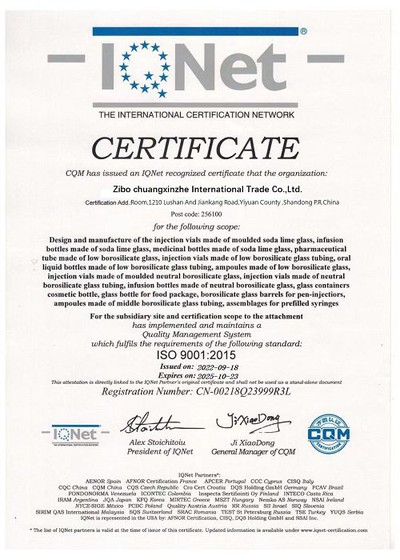
Our Certificate
Below are our certificate:


Our Factory
Below is our factory:


Ultimate Guide
Q: Is it better to store homemade juice in glass or plastic bottles?
Q: What are the risks of storing fruit juices in plastic vs glass packaging?
Q: Why do bottles and jars have thick glass bottoms?
Q: Why can't a glass jar and bottle be filled to the brim?
Q: What are the small dots on the bottom of a bottle for?
Q: Why is dark glass used for red wine?
Q: What are the advantages of glass bottles and jars over plastic?
Q: Are glass bottles biodegradable?
Q: Why are most beer bottles brown?
Q: Is there a special process of making beer bottles?
Q: Why do bottles have the same capacity but different glass weights?
Q: Why does a white film sometimes appear on glasses and bottles?
Q: How is glass color changed?
Q: Have you ever wondered why you can't fill a glass jar or bottle to the brim?
Q: How many times can you use a glass bottle?
Q: How often should you change glass bottle?
We're well-known as one of the leading beverage bottle enterprises in China, specialized in providing high quality customized service. Please rest assured to wholesale beverage bottle at competitive price from our factory. Contact us for free sample.
Coffee Glass Bottle, Flat Juice Containers, Juice Bottles for Sale