


The Amber Antibiotic Glass Bottle is a type of pharmaceutical container that is specifically designed for the storage of antibiotics and other types of medications. This type of glass bottle is made from high-quality amber glass that provides superior protection against light and UV radiation, helping to maintain the potency and efficacy of the medications stored within.
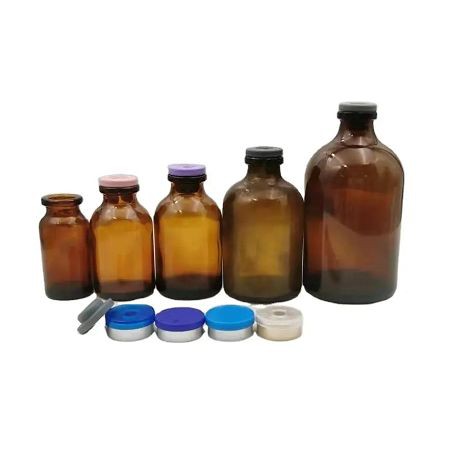
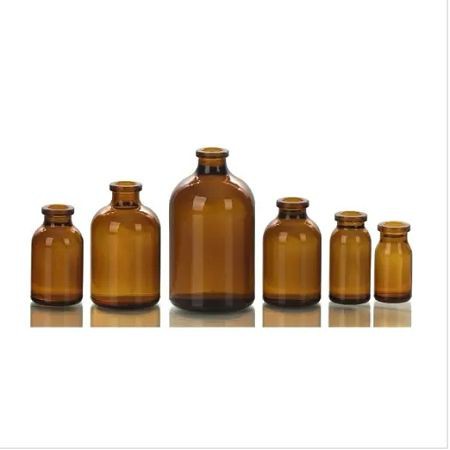
Available in sizes ranging from 7ml to 100ml, the Amber Antibiotic Glass Bottle is an ideal solution for the safe and secure storage of pharmaceuticals in both laboratory and clinical settings. The high-quality construction of this glass bottle ensures that it is resistant to chemical corrosion, making it suitable for use with a wide range of different types of medications and therapeutic agents.
One of the key benefits of the Amber Antibiotic Glass Bottle is that it is highly durable and long-lasting, with a robust design that can withstand frequent use and handling without cracking or breaking. This makes it an ideal solution for use in busy clinical environments where medications need to be stored and accessed quickly and efficiently.

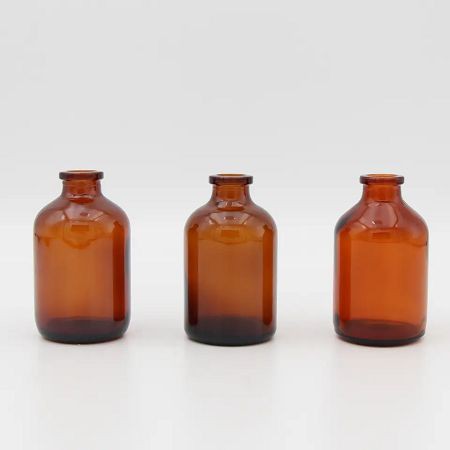
Overall, the Amber Antibiotic Glass Bottle is an essential tool for any healthcare professional or researcher who needs to store and dispense medications safely and securely. With its high-quality construction and durable design, this glass bottle offers superior protection against light and UV radiation, helping to ensure the safety and efficacy of the medications stored within. Whether you are working in a laboratory, hospital, or clinical setting, the Amber Antibiotic Glass Bottle is the perfect solution for your medication storage needs.
Product Description
Amber Moulded Injection vial for antibiotics, USP Type I
Moulded Injection vials, in conformity with USP type I , used for filling antibiotic injectable powder and lyophilized power, organisms preparations, etc. its qualitu is up to SFDA and ISO standard. SPG type I glass is a borosilicate glass reaches the hydrolytic resistance complying with the requirements special for the classes of ISO 4802-HC1. The production of which has passed the ceritificate of conformity of product quality.
|
Moulded Injection Glass Vial for Antibiotics |
||||||
|
Size |
Height without cap |
Diameter |
Neck Size |
Bottle Color |
USP |
Packaging |
|
7ml |
40.8mm |
22.10mm |
ISO 20mm |
Clear,Amber |
Type I,II,III |
1330pcs/carton |
|
8ml |
46.8mm |
23.0mm |
ISO 20mm |
Clear,Amber |
Type I,II,III |
936pcs/carton |
|
10ml |
53.5mm |
25.4mm |
ISO 20mm |
Clear,Amber |
Type I,II,III |
768pcs/carton |
|
15ml |
58.8mm |
26.5mm |
ISO 20mm |
Clear,Amber |
Type I,II,III |
660pcs/carton |
|
20ml |
58.0mm |
32.0mm |
ISO 20mm |
Clear,Amber |
Type I,II,III |
480pcs/carton |
|
30ml |
62.8mm |
36.0mm |
ISO 20mm |
Clear,Amber |
Type I,II,III |
276pcs/carton |
|
50ml |
73.0mm |
42.5mm |
ISO 20mm |
Clear,Amber |
Type I,II,III |
336pcs/carton |
|
100ml |
94.5mm |
51.6mm |
ISO 20mm |
Clear,Amber |
Type I,II,III |
198pcs/carton |

Many Benefits of Amber Glass Containers
Several of the benefits of amber glass are common to glass of all types. These include:
Glass is almost completely inert, so it doesn't break down or leach chemicals into whatever it's storing.
Since it's made from widely available materials, glass is relatively inexpensive.
Glass can be easily strengthened by using techniques like tempering and by the addition of various metals and minerals during manufacturing.
Glass loses heat less quickly than metal does. Thus, for a beverage that you want to keep cold as long as possible, glass is often the superior choice.
Amber glass, however, interacts with light in some unique ways that make it extremely useful:
Like some other types, amber glass completely blocks UV light.
However, unlike these others, it also blocks blue light and all other light wavelengths under 450 nm. This makes it ideal for storing light-sensitive products.
Applications of Amber Glass
Amber glass, especially amber glass jugs, are often associated with beer, and this is no accident. Photooxidation degrades beer's key components, transforming them into a compound known as MBT, which gives sour beer its distinctive "skunked" flavour. Amber glass's ability to filter out light makes it an excellent choice for storing beer due to its light-filtering properties.
Amber glass is also commonly used to store essential oils. Photooxidation can produce reactions that change the character of these oils, which are prized for their distinctive scents. Vanilla extract, for example, is commonly stored in amber glass because of this. Keeping oils in plastic containers is also a bad idea because some oils will leach if the plastic breaks down. Amber glass is ideal for storing essential oils because it is both protective and non-reactive.
Some pharmaceuticals are protected with amber glass, which is essential. Pharmacy and apothecary products were once housed in amber glass vials. Until recently, all medications came packaged in amber glass bottles, including antibiotics, eye drops, and various tinctures. As a result of chemical leaching concerns from plastic bottles, many of these drugs are still packaged in amber glass bottles. As a result, it's famous for storing household remedies as well.

Packing



Hot Tags: amber antibiotic glass bottle, China amber antibiotic glass bottle factory, Injection Vial Opener, Glass Vial Opener, Clear Moulded Glass Vial Bottle, Empty Ampoule Bottle, Clear Moulded Injection Glass Ampoule Bottles, Ampoule Bottle


